
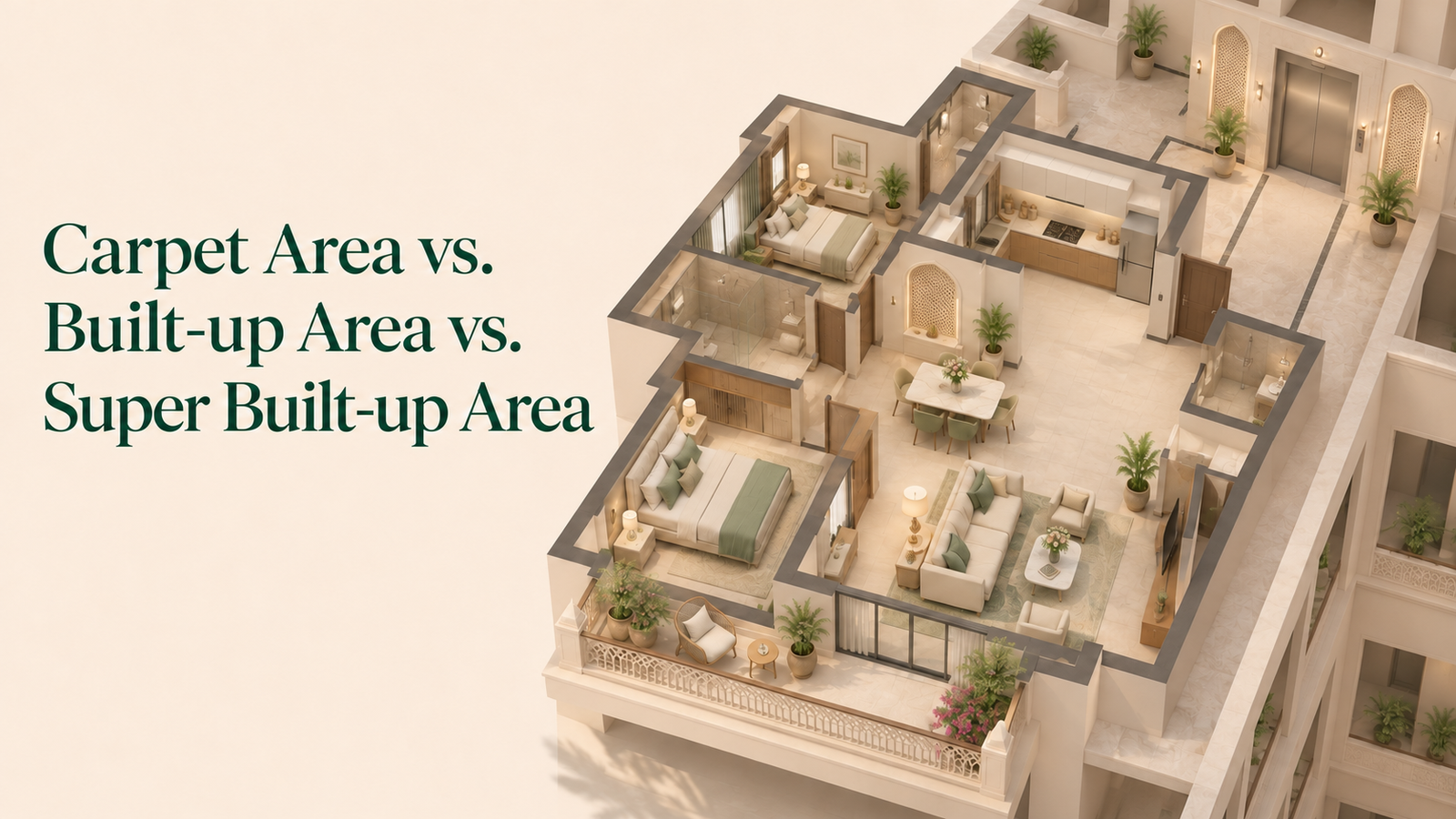
Carpet area is the net usable floor area of the apartment as defined under RERA. Built-up area adds wall thickness and balconies. Super built-up area adds a proportionate share of common areas on top of that. Always compare the RERA-declared carpet area and the total property consideration, not just the headline square-foot figure.
1. Introduction
Imagine finding two apartments in Jaipur, both advertised as 1,500 sq. ft. Their prices are comparable, their locations are equally convenient, and their brochures promise spacious living. Yet, when you examine their floor plans, one apartment appears considerably more spacious than the other. How can two homes with identical advertised areas offer different amounts of usable space?
The answer often lies in how their areas have been calculated.
Understanding Carpet Area vs. Built-up vs. Super Built-up Area is essential when evaluating a residential property. These measurements influence how you compare apartments, assess pricing and understand what you are actually purchasing. A larger number on a property brochure does not necessarily translate into more room for your furniture, family or everyday activities.
At Aashish Group, we believe an informed homebuyer is better equipped to make a confident property decision. Whether you are exploring our residential developments or comparing properties across Jaipur, understanding these three measurements is a useful place to start.
2. RERA Changed the Way Homebuyers Understand Apartment Sizes
For years, differences in the way developers advertised apartment sizes made property comparisons confusing. One developer might quote built-up area, another might highlight super built-up area, while buyers were primarily interested in knowing how much space they would actually have inside their homes.
The Real Estate (Regulation and Development) Act, 2016, commonly known as RERA, brought greater transparency to this process by establishing a statutory definition of carpet area.
Defines carpet area
Under Section 2(k), carpet area means the net usable floor area of an apartment, excluding the area covered by external walls, service shafts, exclusive balconies or verandahs and exclusive open terraces. However, it includes the area covered by internal partition walls (Government of India, 2016).
Requires disclosure
Further, Section 4(2)(h) requires promoters to disclose the number, type and carpet area of apartments available for sale in a registered project, along with the applicable exclusive balcony and open terrace areas (Government of India, 2016).
This distinction matters because buyers now have a more consistent measurement against which to evaluate residential properties. Instead of relying exclusively on the headline area mentioned in a brochure, you can examine the declared RERA carpet area and understand what it represents.
3. Carpet Area: The Space That Shapes Your Everyday Living
Think about the practical experience of living in an apartment. You want enough room for a comfortable living area, functional bedrooms, wardrobes, a dining space and convenient movement between rooms. These requirements make the apartment's usable floor area particularly important.
Carpet area represents the net usable floor area within the apartment. Under RERA, it includes internal partition walls but excludes external walls, service shafts and exclusive balcony, verandah and open terrace areas (Government of India, 2016, § 2[k]).
Consider a hypothetical apartment with a RERA carpet area of 900 sq. ft. This figure represents its defined net usable floor area, including internal partition walls. An exclusive balcony, however, is not added to this figure.
One detail worth remembering is that RERA carpet area and the everyday interpretation of usable floor space are not exactly identical. Since internal partition walls are included in the statutory definition, the carpet area should not be interpreted as the precise area available for placing furniture.
This is also why examining the floor plan is important. Two apartments with similar carpet areas may have different layouts. A thoughtfully arranged living room, well-proportioned bedrooms and practical circulation spaces can make a meaningful difference to the experience of living in a home.
4. Built-up Area: When Walls and Balconies Become Part of the Calculation
An apartment is more than its internal usable floor area. Its physical structure includes walls, balconies and other architectural elements that contribute to the overall area.
This is where built-up area enters the picture.
In Rajasthan, the prescribed Form-G Agreement for Sale provides a definition of built-up area that includes the area encompassed within the apartment's walls, balconies, whether covered or uncovered, and wall thickness. Where a wall is shared, 50% of its thickness is considered while calculating the built-up area (Rajasthan Real Estate Regulatory Authority, 2026).
For example, imagine a hypothetical apartment with a carpet area of 900 sq. ft. Once the applicable wall thickness and balcony areas are accounted for, its built-up area may be 1,000 sq. ft.
These figures are illustrative, not an industry-prescribed ratio.
The distinction in built-up area vs. carpet area becomes important when you compare properties. An apartment with a higher built-up area may not necessarily offer proportionately more usable living space. Therefore, understanding the components behind the advertised figure is more useful than comparing square footage in isolation.
5. Super Built-up Area: Understanding Your Share of Common Spaces
Now consider the spaces you use without them being located inside your apartment. Staircases, lifts, corridors and lobbies are essential components of a residential development. They contribute to the functioning and accessibility of the building and are shared by its residents.
Super built-up area is an industry-used measurement that generally combines an apartment's built-up area with its proportionate allocation of certain common areas. It is also commonly referred to as saleable area.
For instance, if an apartment has a built-up area of 1,000 sq. ft. and an allocated share of common areas amounting to 200 sq. ft., its super built-up area would be 1,200 sq. ft.
The additional 200 sq. ft. does not represent private space within the apartment. It represents the proportionate common-area allocation used in arriving at the advertised measurement.
This brings us to another term frequently encountered during property comparisons: the loading factor.
The loading factor expresses the difference between super built-up area and carpet area as a percentage of carpet area.
Loading Factor = [(Super Built-up Area − Carpet Area) ÷ Carpet Area] × 100
Using the hypothetical figures above, if the carpet area is 900 sq. ft. and the super built-up area is 1,200 sq. ft., the loading factor is 33.33%.
It is important to understand that RERA does not prescribe a universal loading percentage or a standard super built-up area calculation. These are industry practices, and buyers should ask developers how the stated measurements and common-area allocations have been calculated.
6. Built-up vs. Carpet Area vs. Super Built-up Area: A Quick Comparison
| Parameter | Carpet Area | Built-up Area | Super Built-up Area |
|---|---|---|---|
| Internal usable floor area | Included | Included | Reflected through built-up area |
| Internal partition walls | Included | Included | Reflected through built-up area |
| External walls | Excluded | Included | Reflected through built-up area |
| Exclusive balconies | Excluded | Included | Generally reflected through built-up area |
| Proportionate common areas | Excluded | Excluded | Generally included |
| Statutory definition | RERA Act | Rajasthan Form-G | No universal RERA definition |
The difference between super built-up area vs. carpet area becomes particularly relevant when comparing property prices. For example, two apartments advertised at ₹6,000 per sq. ft. may appear equally priced. However, if one rate is calculated on super built-up area and the other on carpet area, the comparison is not like-for-like.
Always examine the total property consideration alongside the declared carpet area before evaluating whether a particular apartment offers value for money.
Want to Compare Carpet Areas Before You Decide?
Our advisors can walk you through configurations, carpet areas and RERA status across Aashish Group projects.
7. Before You Book a Home in Jaipur, Look Beyond the Brochure
A property brochure introduces you to a development, but it should not be the only document informing your purchase decision. Once you shortlist an apartment, take time to examine its approved plans and contractual disclosures.
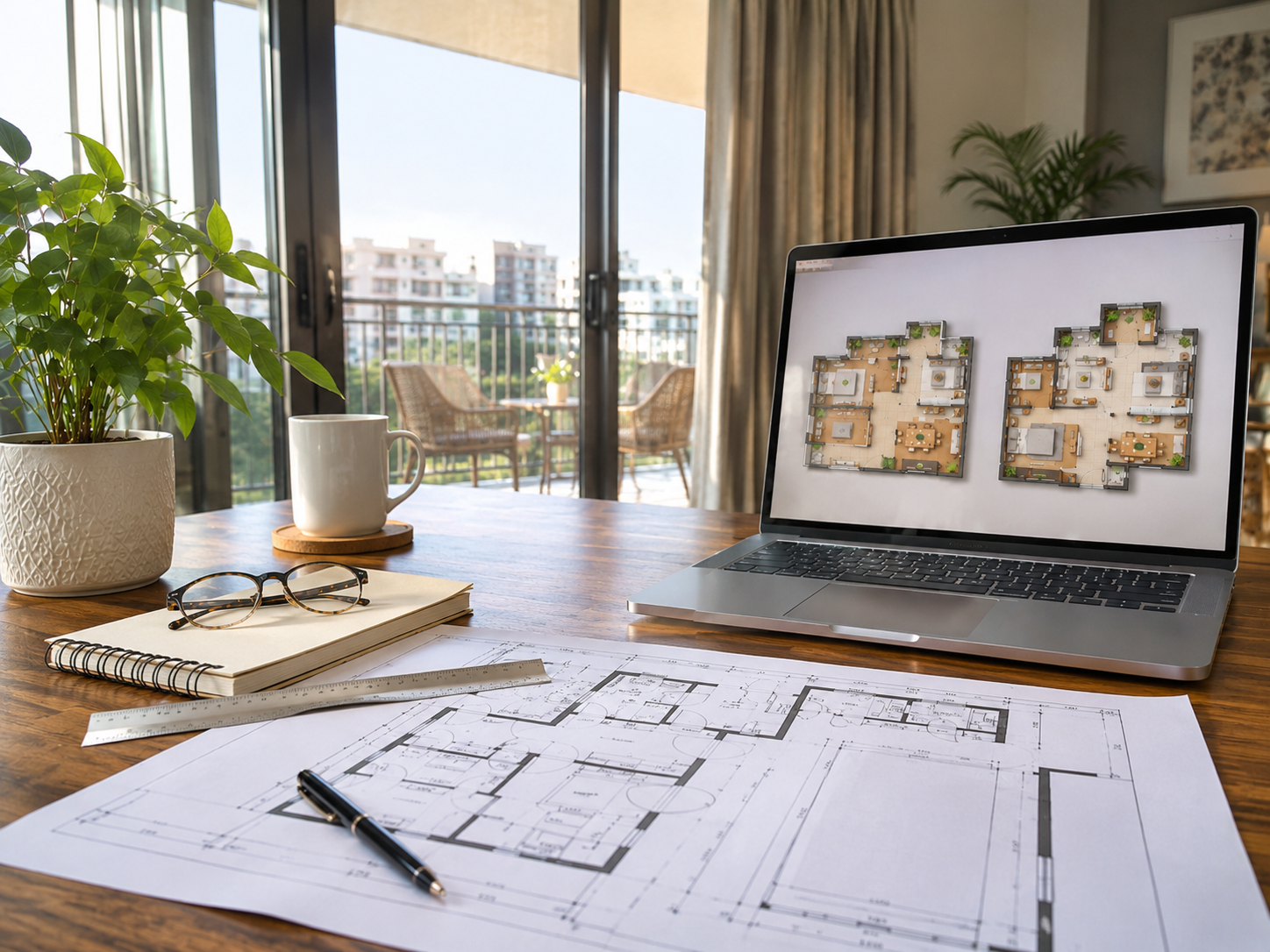
Start by checking the project's registration details on the Rajasthan RERA portal. Compare the declared carpet area with the details provided in the allotment documentation and Agreement for Sale. Examine the sanctioned floor plan to understand room dimensions, balcony arrangements and the apartment's overall layout.
Rajasthan's prescribed Form-G Agreement for Sale is particularly relevant because it establishes the contractual framework between the promoter and the allottee under Rule 9 of the Rajasthan Real Estate Rules, 2017 (Government of Rajasthan, 2017).
If the area mentioned in a brochure differs from the agreement or other project disclosures, seek a written explanation before proceeding.
What happens if the delivered apartment differs from what was agreed upon? The answer depends on the nature of the discrepancy, the contractual terms and the applicable legal provisions. Section 14 of RERA addresses adherence to sanctioned plans and project specifications, while Section 18 provides remedies in specified circumstances involving a promoter's failure to fulfil obligations (Government of India, 2016).
Document any discrepancy and seek appropriate professional advice rather than assuming that every difference automatically attracts the same legal remedy.
8. Choosing a Residential Development: Why the Details Matter
Understanding apartment measurements is only one part of evaluating a residential property. The layout, architectural planning, natural lighting, ventilation, construction quality and maintenance of shared spaces also influence how comfortably you will live in the development.
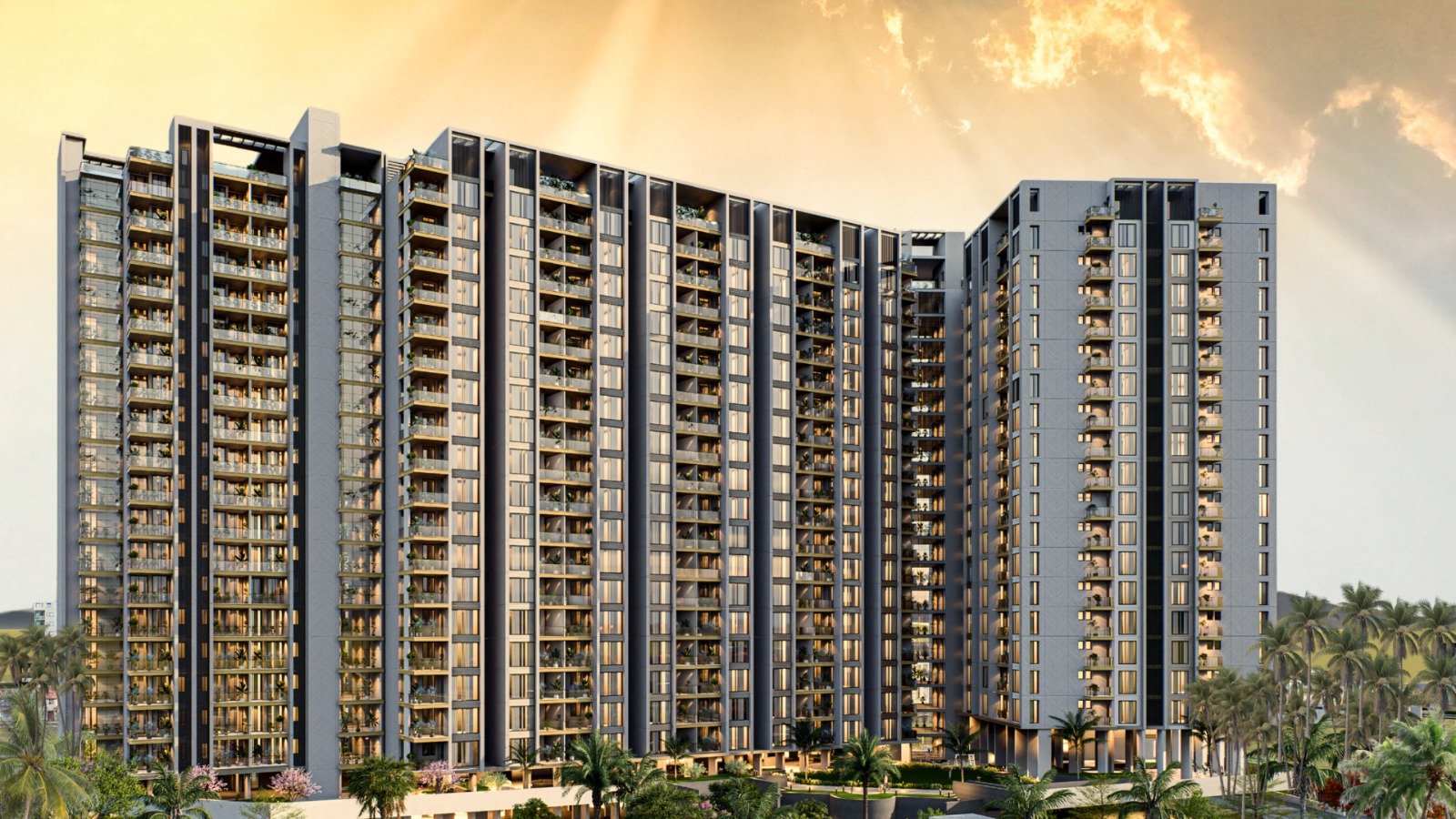
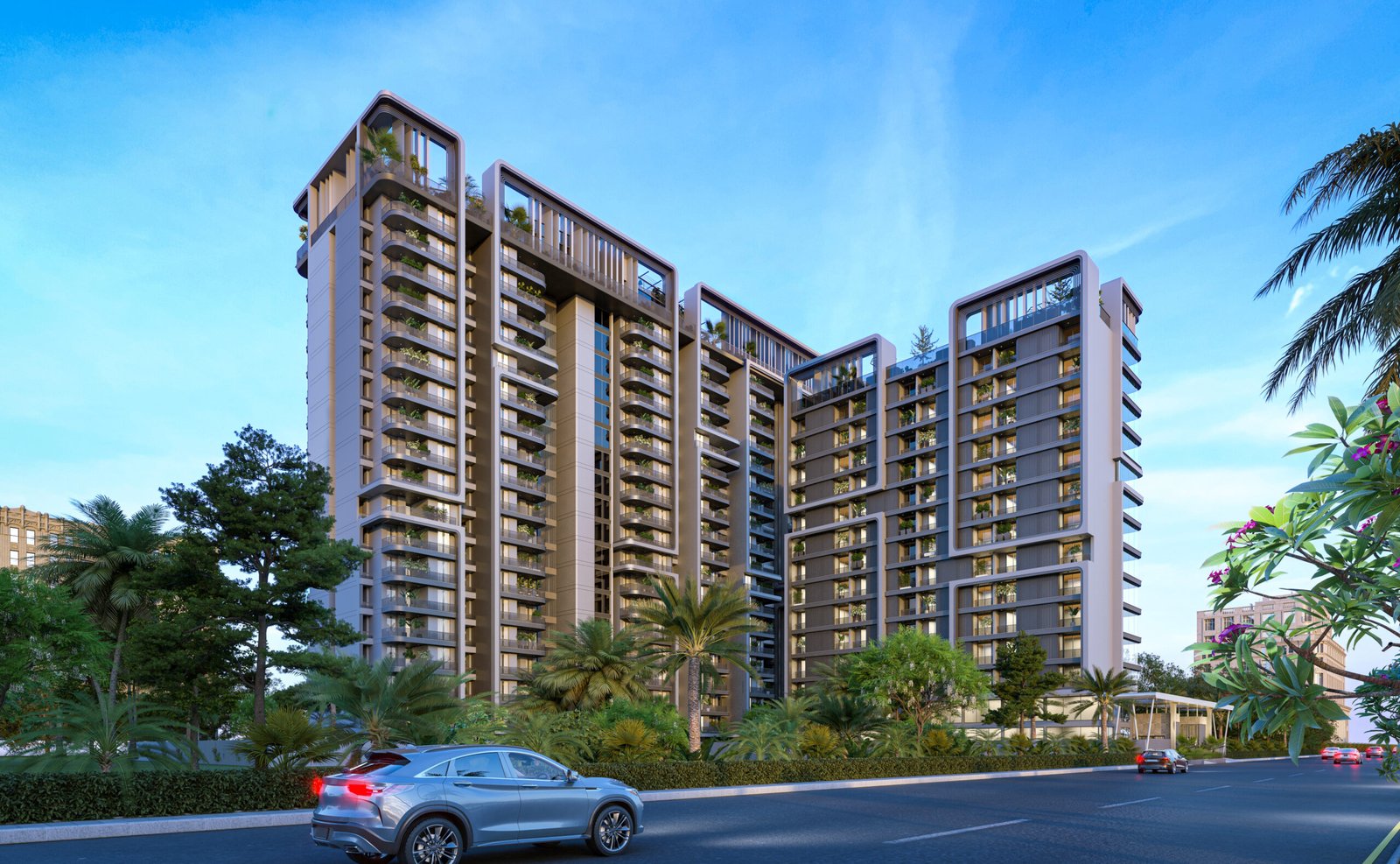
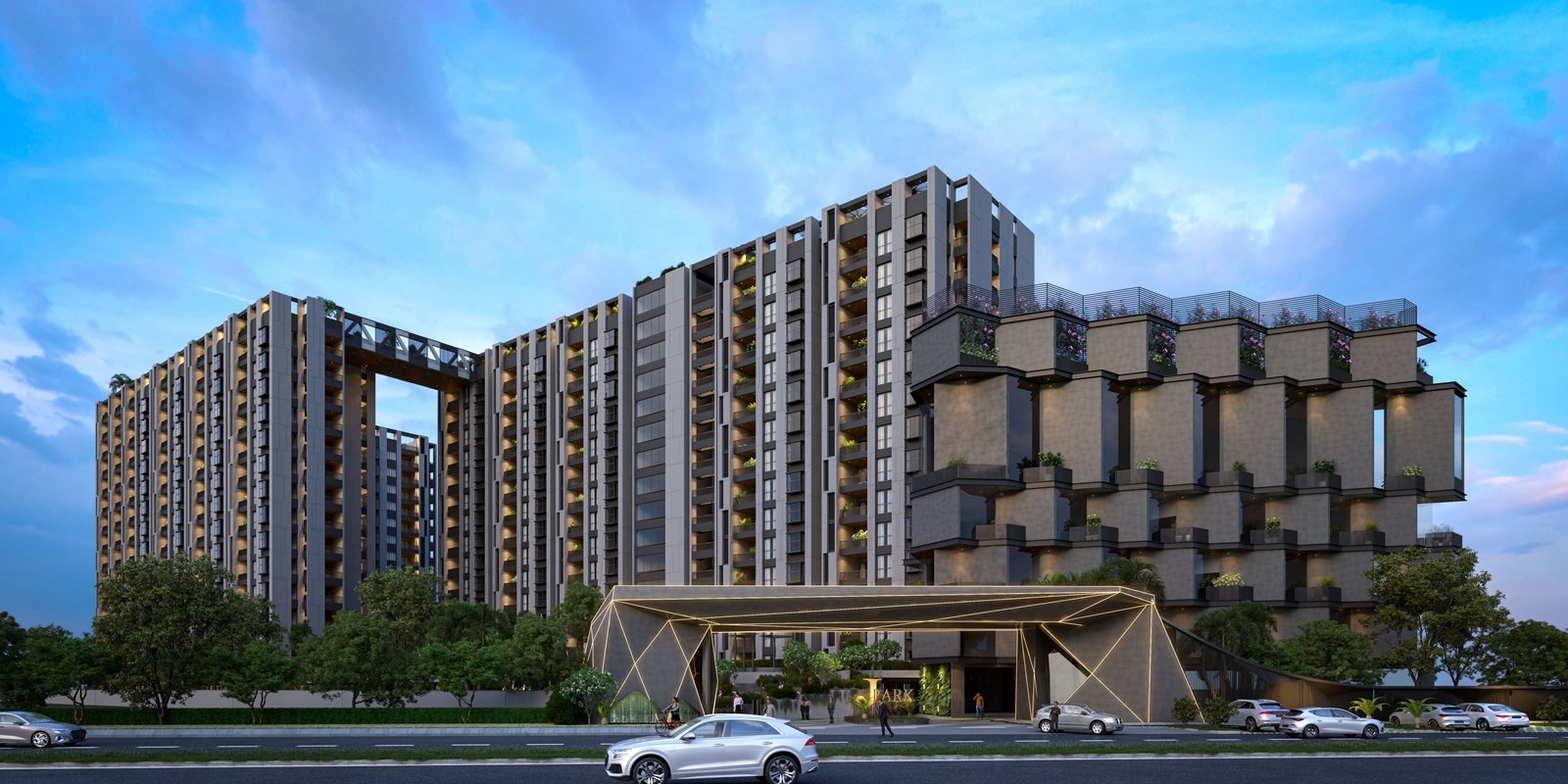
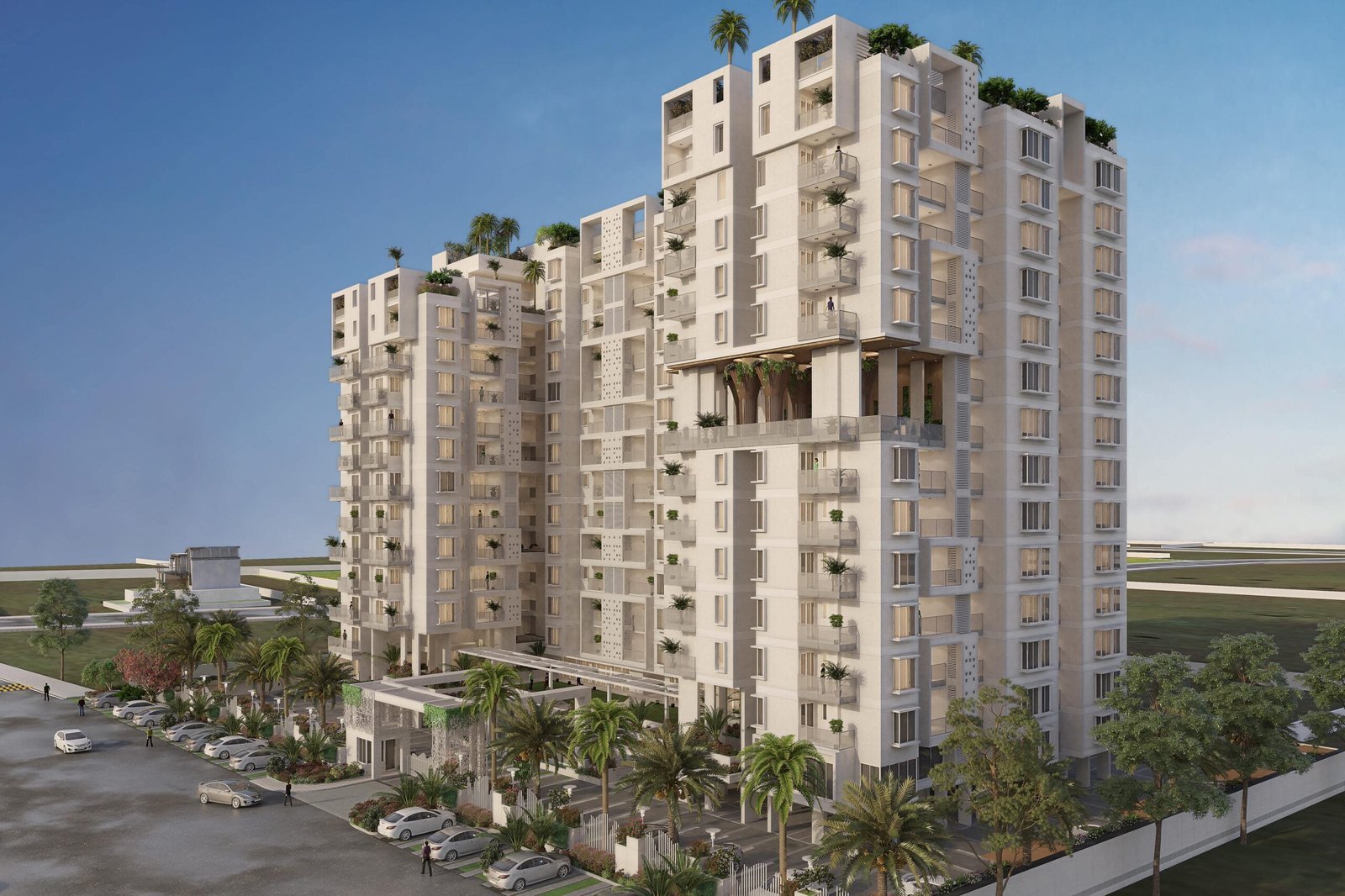
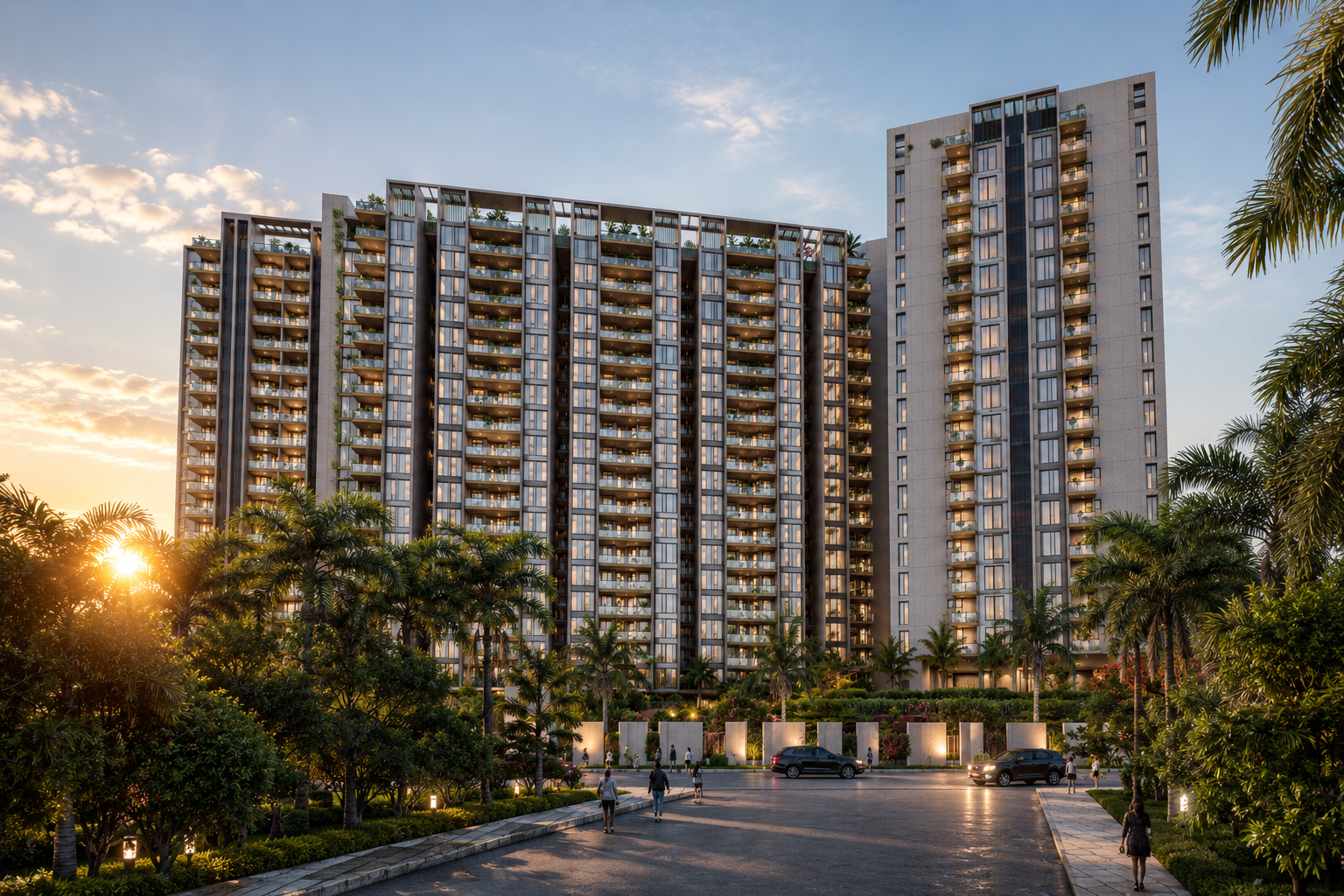
When exploring residential properties in Jaipur, you can discover Aashish Group's portfolio through projects such as V Park, Nital, J Park, Utpal, Govardhan Heights and Aamor.
V Park
Sirsi Road, Jaipur
1 RK and 2 BHK
High-Rise Residential
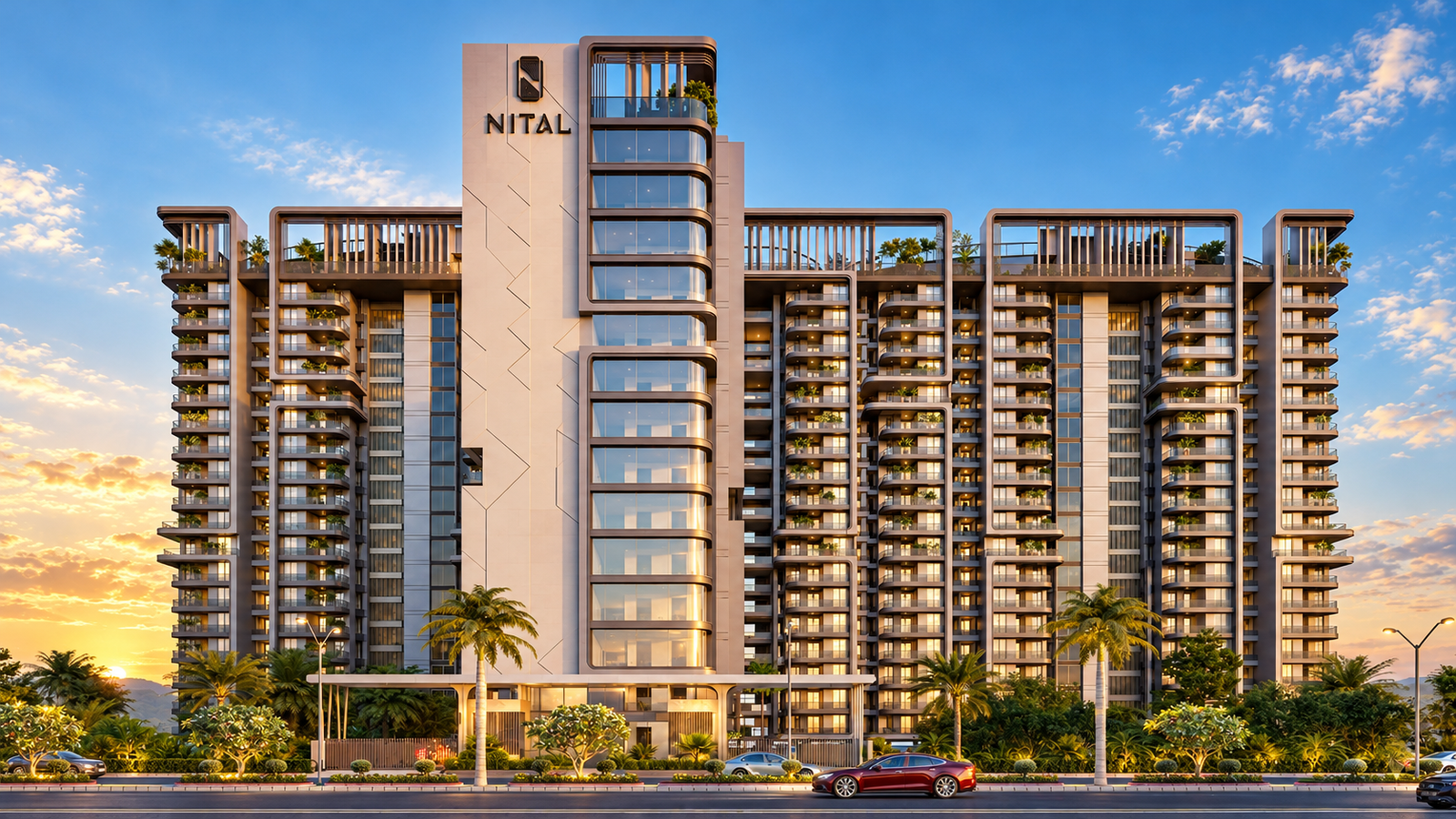
Nital
Vatika Infotech City, Jaipur
7,67,000
Studio and 3 BHK High-Rise Residential
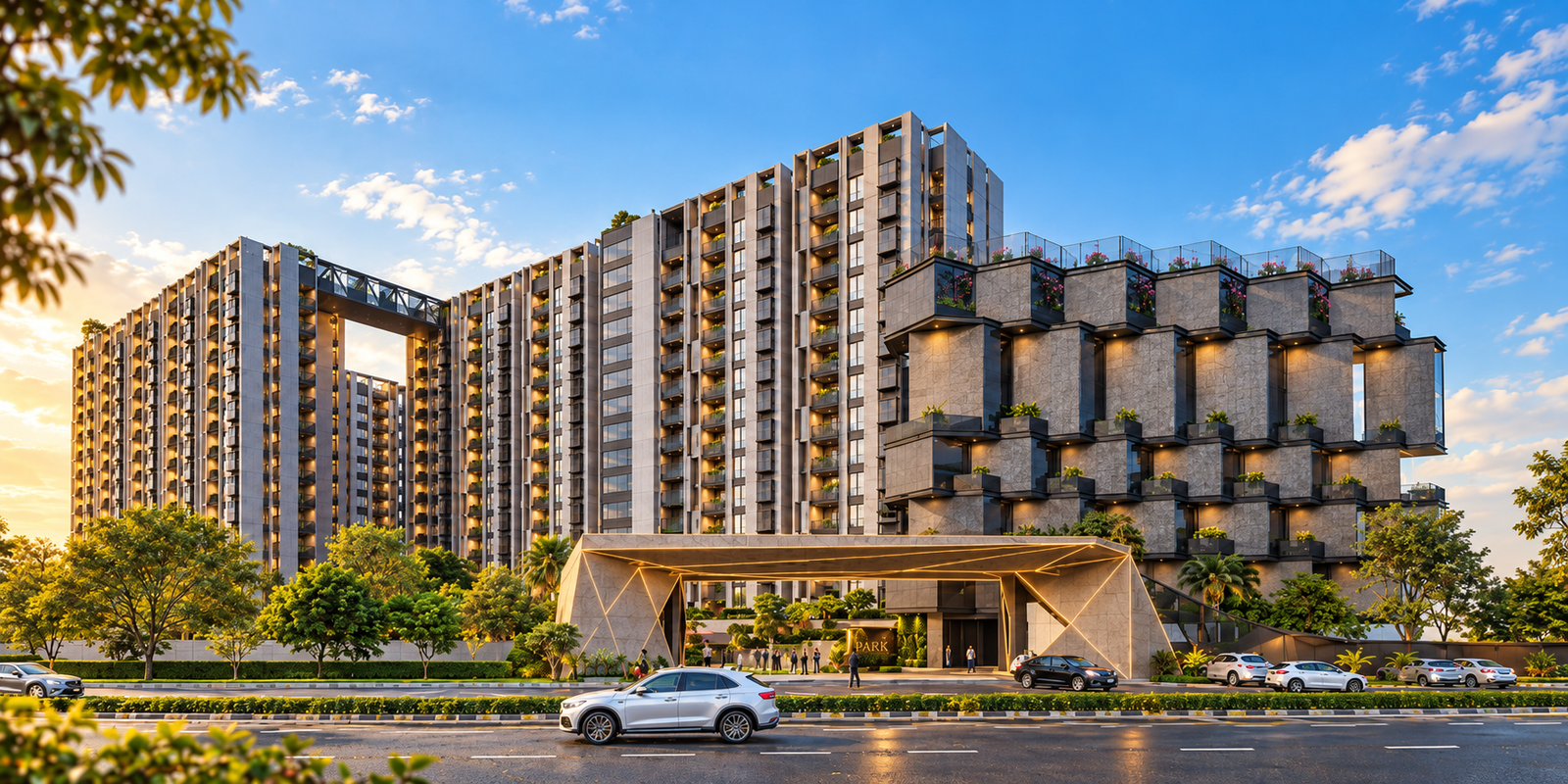
J Park
Hajiwala, Mansarovar Ext., Jaipur
1 & 3 BHK
High-Rise Residential
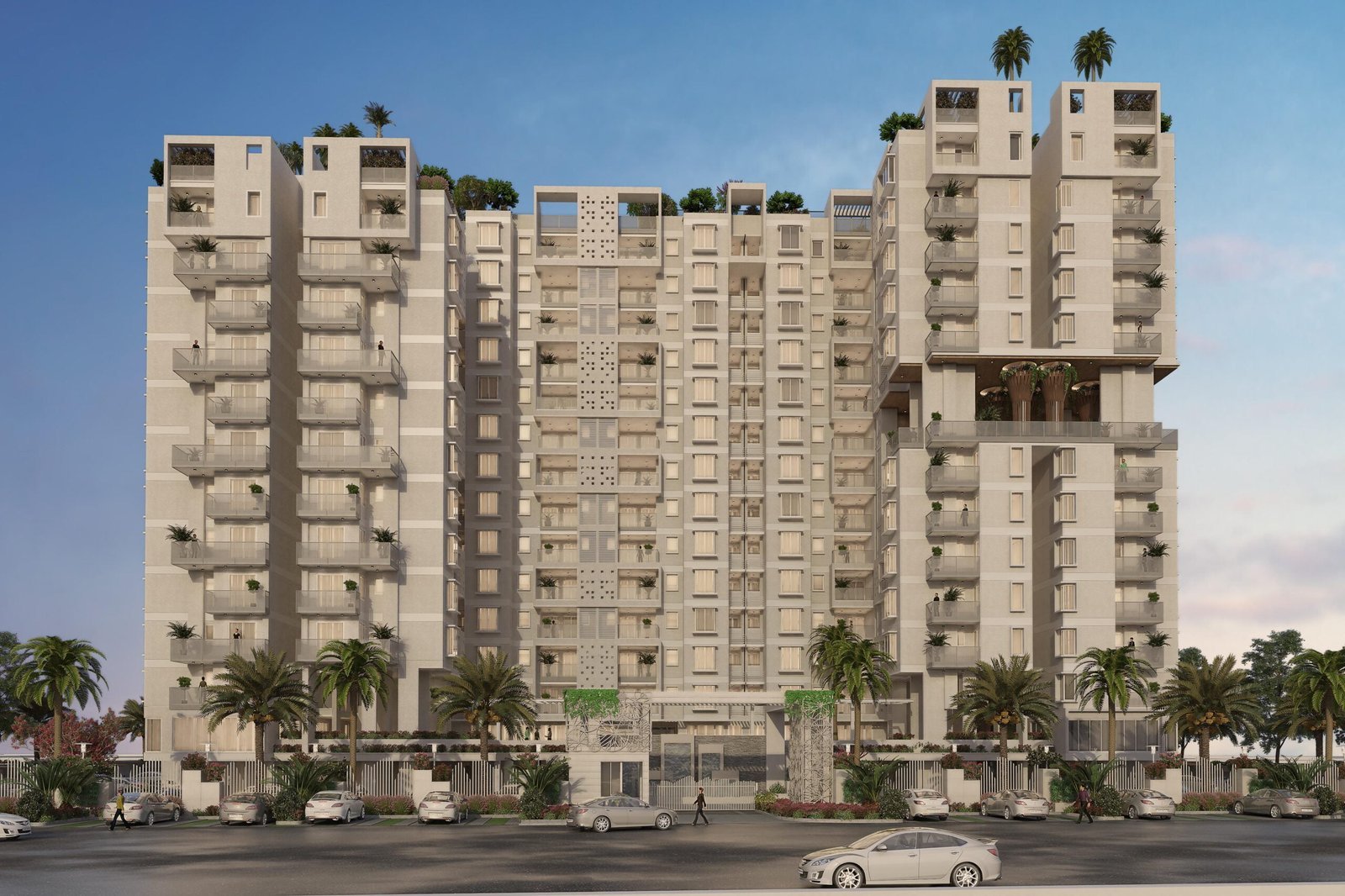
Utpal
Mansarovar, Jaipur
1 & 3 BHK
Residential Tower
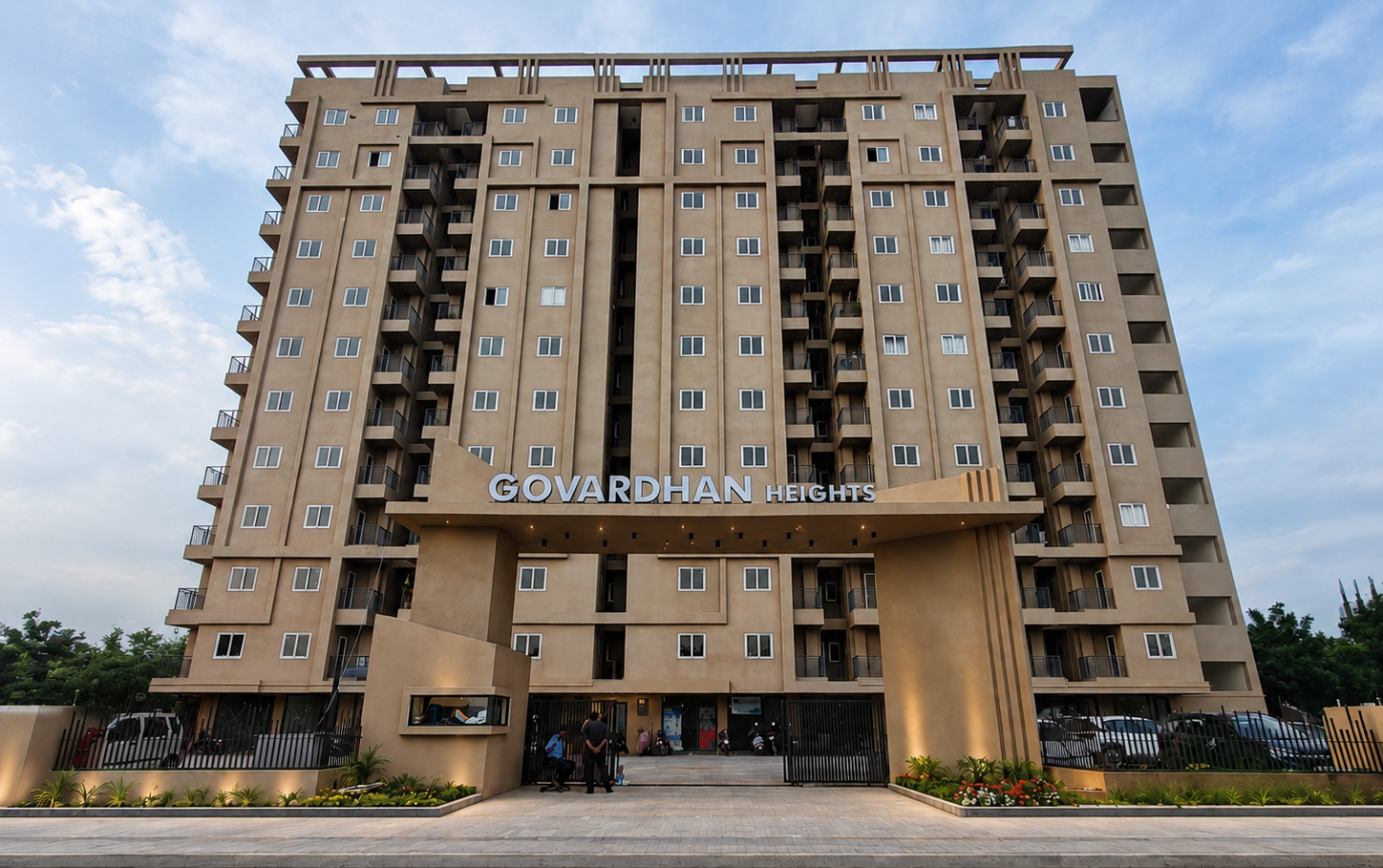
Govardhan Heights
Jaisinghpura, Jaipur, Bhankrota
1, 2 & 3 BHK
Residential Tower
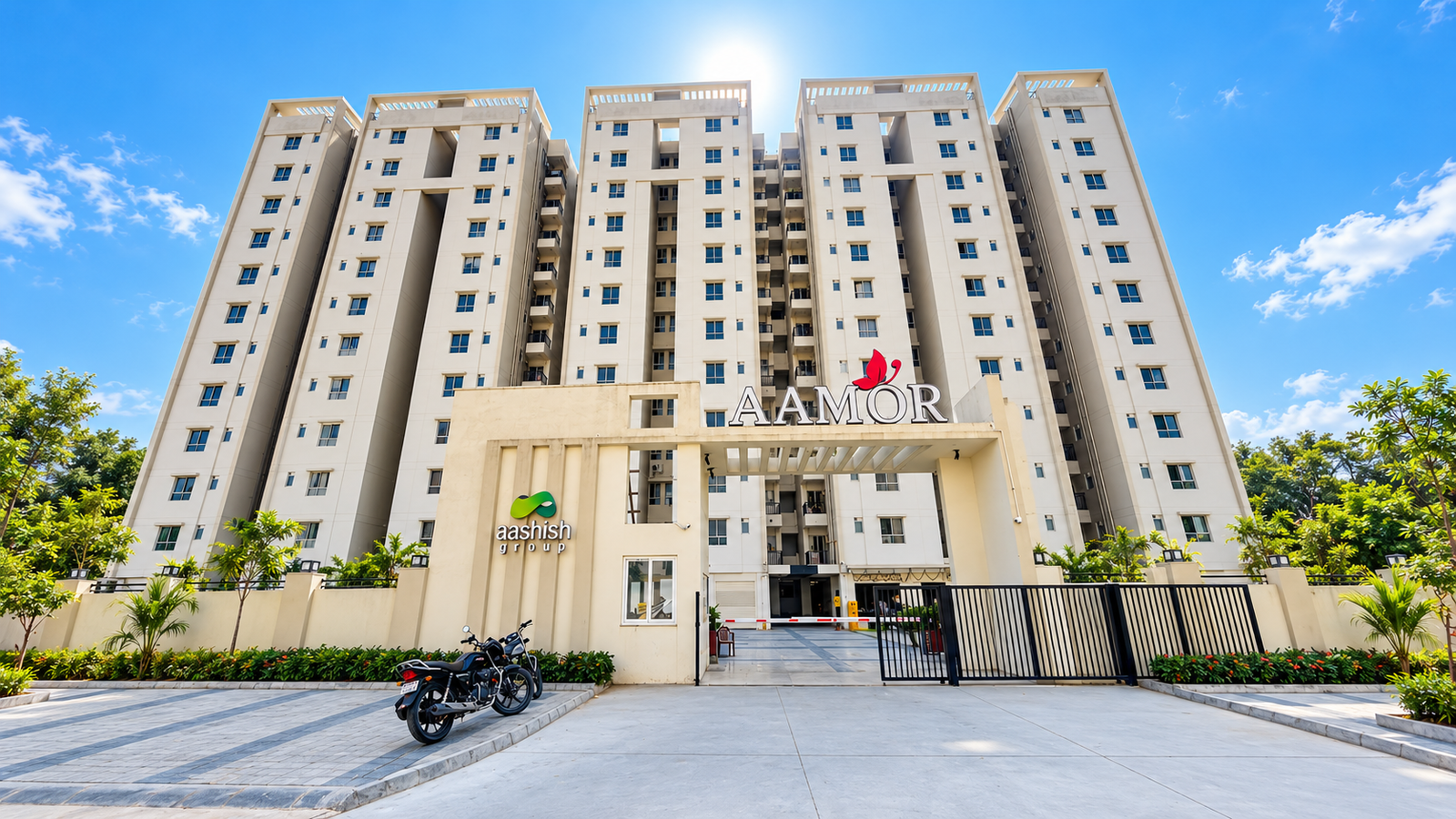
Aamor
Patrakar Colony Extension, Mansarovar, Jaipur
1, 2 & 3 BHK
Residential Tower
Each development offers an opportunity to explore a different residential setting. Rather than relying solely on advertised square footage, examine the individual apartment configurations, declared carpet areas, approved layouts and project specifications. Consider how the available space corresponds with your family's requirements and how the overall development fits your expectations.
Aashish Group places emphasis on construction quality and customer-centric execution through its in-house construction wing, dedicated quality teams and independent external testing agencies. These processes reflect the importance of looking beyond the brochure and understanding the planning and execution behind a residential development.
9. Make Your Next Homebuying Decision with Clarity
When comparing apartments, the largest number on a brochure is not necessarily the most important one. What matters is understanding how the area has been calculated, how the apartment is planned and whether the specifications match what has been promised.
A well-informed decision considers both the space within your home and the quality of the residential development around it.
Looking for your next home in Jaipur? Explore the residential portfolio of Aashish Group, including Utpal, J Park, Nital, V Park, Govardhan Heights and Aamor. Visit our project pages to discover the developments, review their residential offerings and connect with our team for detailed information on apartment configurations and specifications.
Because choosing the right home should begin with understanding what you are buying, not just how many square feet are advertised.
Frequently Asked Questions
Under Section 2(k) of the Real Estate (Regulation and Development) Act, 2016, carpet area is the net usable floor area of an apartment. It includes internal partition walls but excludes external walls, service shafts, exclusive balconies or verandahs and exclusive open terraces.
Carpet area is the net usable floor area as defined under RERA. Built-up area, as defined in Rajasthan's Form-G Agreement for Sale, includes the area within the apartment's walls, balconies (covered or uncovered) and wall thickness, with 50% of the thickness counted for shared walls.
Super built-up area is an industry-used measurement that generally combines built-up area with a proportionate share of common areas such as staircases, lifts, corridors and lobbies. It is also commonly called saleable area, and RERA does not give it a universal definition.
The loading factor is the difference between super built-up area and carpet area, expressed as a percentage of carpet area: [(Super Built-up Area − Carpet Area) ÷ Carpet Area] × 100. For a 900 sq. ft. carpet area and a 1,200 sq. ft. super built-up area, it is 33.33%. RERA does not prescribe a universal loading percentage.
No. If one rate is calculated on super built-up area and the other on carpet area, the comparison is not like-for-like. Compare the total property consideration along with the declared carpet area.
Check the project's registration details on the Rajasthan RERA portal, then compare the declared carpet area with the allotment documentation, the Agreement for Sale and the sanctioned floor plan.
Seek a written explanation before proceeding. If the delivered apartment later differs from what was agreed, the remedy depends on the nature of the discrepancy, the contractual terms and applicable provisions such as Sections 14 and 18 of RERA. Document the discrepancy and seek appropriate professional advice.
Related & Explore

Bypass the Market Noise. Secure Premium Assets Directly.
Aashish Group offers an exclusive portfolio of RERA-registered luxury and premium apartments across Jaipur’s most coveted locations. Purchase directly from the developer to ensure absolute transparency, guaranteed delivery, and zero brokerage fees.
Explore the Aashish Group PortfolioThis article is for informational and educational purposes only and does not constitute financial or investment advice. Property values and prices are subject to market risk and individual due diligence. Figures used in the examples are hypothetical and illustrative.